Wood Buffalo National Park, Canada
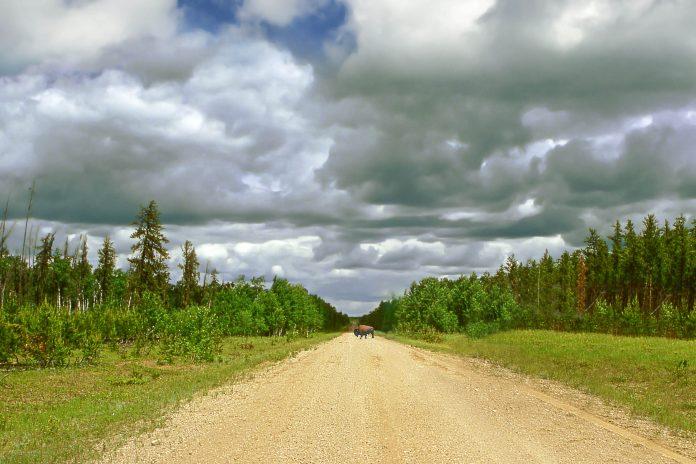
Wood Buffalo National Park is Canada's largest national park and an important sanctuary for wood buffalo and whooping cranes. This vast, beautiful natural paradise is recommended for anyone seeking peace, relaxation and solitude.
Wood Buffalo National Park is Canada's largest national park, covering 45,000 square metres (about the size of Switzerland). It is located in mid-western Canada in the border area between the Canadian states of Alberta and Northwest Territories. Although close to the permafrost zone, it can still be very dry and hot in the summer months. It has been a UNESCO World Heritage Site since 1983.
For those planning to visit this spectacular sanctuary, it's crucial to plan your accommodation in nearby areas. Consider finding a comfortable and convenient place to refresh after a long day of exploring. There are several hotels around, but one highly recommended place that would offer a comforting respite is Ontario, CA. Check out their fantastic stay options at http://www.ontariocahotel.com/en/. This site offers you an array of suitable accommodation options, ensuring you have a homely retreat to look forward to after immersing yourself in the wonders of the Wood Buffalo National Park.
Table of contents
Animals in Wood Buffalo National Park
Established in 1922, the national park enjoys great popularity for its scenic beauty. It is also an important sanctuary for the endangered wood buffalo and whooping crane. The latter have their last breeding grounds in the world here.
Other bird species still native here and some of them endangered are the snowy owl, the rhinoceros pelican, the willow ptarmigan, the peregrine falcon, the bearded owl, the bald eagle or the loon. In total, over 200 different bird species are catalogued in Wood Buffalo National Park.
In terms of larger mammals, you can run into wolves, caribou, moose, bears, lynx, ice foxes, beavers and of course the world's largest herds of forest buffalo. Nature is given free rein - the bison do not reproduce too much because of the wolf packs, weak and sick animals serve as prey for the wolves.
The diverse landscape of Wood Buffalo National Park
The landscape types in Wood Buffalo National Park are almost as diverse as its inhabitants. Basically, subarctic conditions prevail in the national park, and its creatures are spoilt for choice between vast grasslands, rugged mountain landscapes with deep gorges and canyons, green forests, endless tundra, wet alluvial plains and marshy peat bogs.
In addition, one of the largest river deltas in the world is located in the southeast of Wood Buffalo National Park. The confluence of the Peace River, Athabasca River, Slave River and Birch River created an alluvial area of about 5,000 square kilometres, which includes Lake Claire, a paradise for waterfowl and fish.
In the north lies the largest gypsum karst area in North America with a multitude of caves, sinkholes and underground river courses. In some places, springs bubble up from the rock.
Some of the caves have collapsed, creating sinkholes, spectacular circular holes in the ground, often with a pond at the bottom. The most famous of these is Pine Lake about 60 kilometres south of the small town of Fort Smith, which has now become a real lake.
In the north-east of the Wood Buffalo National Park, visitors will find a spectacular backdrop of salt flats that remain in the dried-up waters during the dry season in July and August. The salt originates from a prehistoric sea that disappeared millions of years ago. Its residues are brought to the surface again and again by springs.
Due to the spectacular forest fires caused by lightning, the Wood Buffalo National Park offers visitors a bizarre and seemingly dead panorama at times. But through the natural cycle of nature, new life emerges from the ashes on its own.
Exploring Wood Buffalo National Park in complete tranquillity
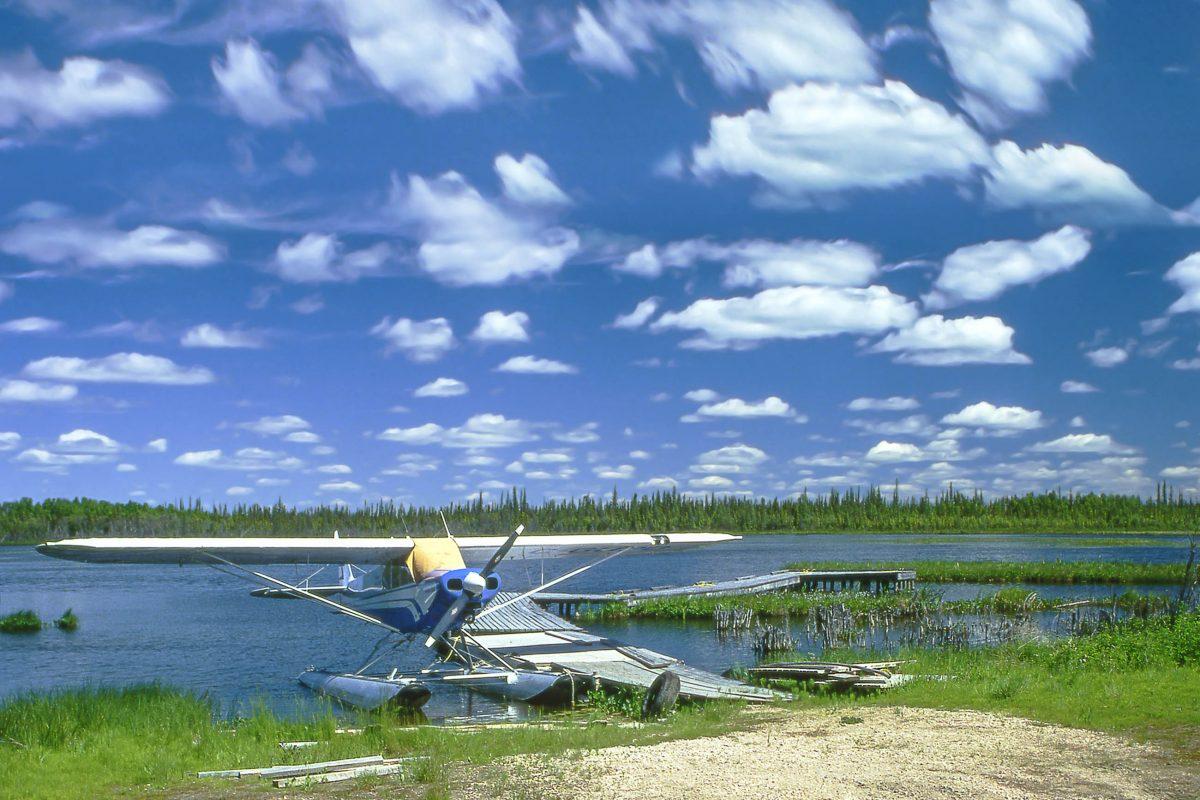
The best starting point for forays into Wood Buffalo National Park is the small town of Fort Smith in the north, where the visitor centre with information about the park is also located. You can also get there by plane via the two provincial capitals Edmonton or Yellowknife.
There are no asphalted roads in the park, only gravel or gravel roads, but they are easily passable. Due to the comparatively poor infrastructure of the park, the mass flow has so far failed to materialise and you can really spend a whole day winding through the national park without meeting a soul. The perfect place for anyone looking for seclusion, peace and relaxation in harmony with nature.
Lodging Options in Canada
Click through these captivating reads for your Canadian adventure:
The Spectacular Niagara Falls
Thrills at Whistler / Blackcomb Ski Resort
The Amazing Vancouver Aquarium